KK Nutrivet Editorial Team
Editorial contributor · Published 10 July 2026
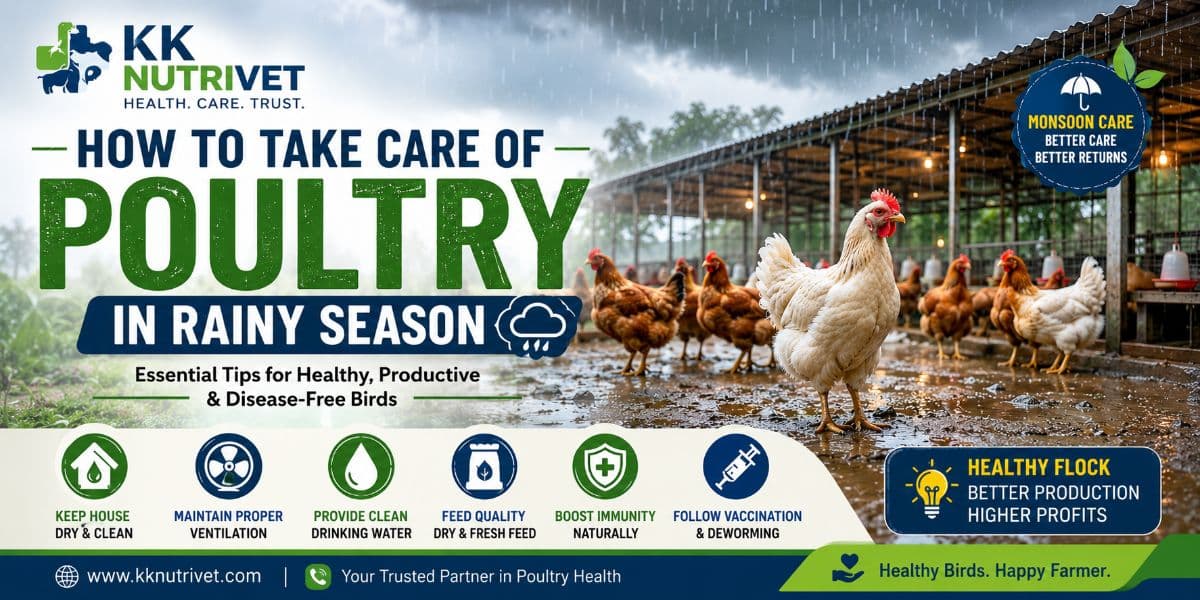
Keep Your Flock Healthy, Productive, and Disease-Free This Monsoon
The rainy season brings relief from the summer heat, but it also creates several challenges for poultry farmers. High humidity, wet litter, poor ventilation, and increased disease outbreaks can significantly affect bird health, growth, and egg production.
With proper management and preventive care, you can protect your flock and minimize losses throughout the monsoon season. This guide covers practical steps every poultry farmer should follow.
Why Is the Rainy Season Risky for Poultry?
During the monsoon, poultry birds are exposed to:
- High humidity causing stress
- Wet litter leading to ammonia buildup
- Growth of bacteria, fungi, and parasites
- Contaminated drinking water
- Reduced feed intake
- Higher risk of respiratory and digestive diseases
---
Good management practices can help prevent these problems before they become serious.
1. Keep the Poultry House Dry
Moisture is one of the biggest threats during the rainy season.
Tips:
- Repair roof leaks before the rains begin.
- Prevent rainwater from entering the poultry shed.
- Ensure proper drainage around the farm.
- Raise the floor level if flooding is common.
- Replace wet litter immediately.
Dry litter helps reduce disease-causing bacteria and improves bird comfort.
---
2. Maintain Proper Ventilation
Many farmers close all windows during heavy rain, but poor ventilation traps moisture and harmful gases.
Ensure:
- Fresh air circulates continuously.
- Side curtains are adjusted according to the weather.
- Ammonia smell is minimized.
- Fans are used if necessary.
Proper airflow keeps birds healthy and reduces respiratory problems.
---
3. Keep Drinking Water Clean
Rainwater can contaminate water sources with harmful bacteria.
Always:
- Clean water tanks daily.
- Wash drinkers regularly.
- Provide fresh drinking water.
- Prevent mud or dirt from entering water containers.
Clean water is essential for maintaining bird health.
---
4. Feed Fresh and Dry Feed
Humidity causes poultry feed to absorb moisture, leading to fungal growth and toxin formation.
Best practices:
- Store feed in a dry, elevated area.
- Keep feed bags away from walls and floors.
- Never feed moldy or foul-smelling feed.
- Purchase feed in quantities that can be used quickly.
Fresh feed supports healthy growth and better immunity.
---
5. Strengthen Bird Immunity
The rainy season increases disease pressure, making strong immunity essential.
Support immunity by:
- Providing balanced nutrition.
- Supplementing vitamins and minerals when recommended.
- Reducing stress through proper management.
- Following vaccination schedules strictly.
Healthy birds are better able to fight infections.
---
6. Monitor Birds Daily
Early detection prevents major disease outbreaks.
Watch for:
- Reduced feed intake
- Sneezing or coughing
- Watery eyes
- Diarrhea
- Swollen face
- Difficulty breathing
- Reduced egg production
- Birds staying inactive
Isolate sick birds immediately and consult a veterinarian if symptoms persist.
---
7. Maintain Strict Farm Hygiene
Good biosecurity becomes even more important during the rainy season.
Remember to:
- Disinfect equipment regularly.
- Restrict unnecessary visitors.
- Clean feeders and drinkers daily.
- Remove dead birds immediately.
- Control rodents and insects.
A clean farm reduces the spread of infectious diseases.
---
8. Follow Vaccination and Deworming Programs
Rainy weather encourages the spread of many poultry diseases.
Ensure:
- Vaccinations are completed on schedule.
- Deworming is carried out as advised by your veterinarian.
- Farm records are maintained for future reference.
Prevention is always more effective than treatment.
---
9. Reduce Stress During Weather Changes
Sudden temperature fluctuations can stress poultry birds.
Help birds stay comfortable by:
- Avoiding overcrowding.
- Maintaining recommended stocking density.
- Providing adequate feeder and drinker space.
- Preventing sudden environmental changes.
Stress-free birds perform better and remain healthier.
10. Use Quality Veterinary Supplements
During the rainy season, poultry may benefit from nutritional support that promotes immunity, gut health, and recovery from stress.
Consult your veterinarian before using supplements and always follow the recommended dosage.
Common Poultry Diseases During the Rainy Season
Be alert for:
- Coccidiosis
- Newcastle Disease
- Infectious Coryza
- Chronic Respiratory Disease (CRD)
- Fowl Cholera
- Salmonellosis
- Aspergillosis
- E. coli infections
Early diagnosis and timely treatment are essential for minimizing losses.
Need Expert Poultry Healthcare Products?
KK Nutrivet offers a wide range of trusted veterinary medicines, nutritional supplements, and poultry healthcare products to help farmers maintain healthy and productive flocks throughout the year.
Visit our website to explore quality poultry care solutions and keep your birds protected this rainy season.